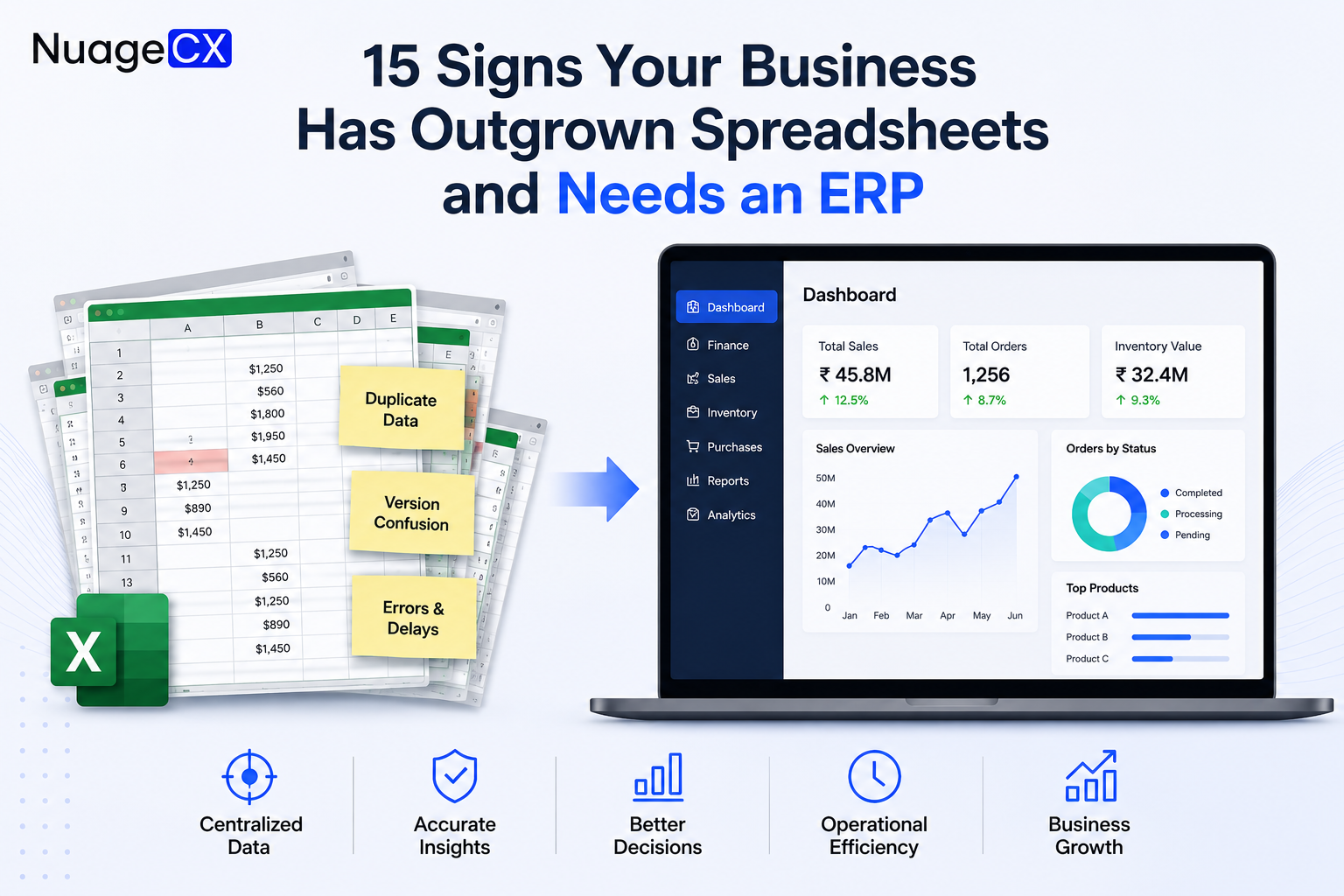
What are the signs that a business needs an ERP?
The most common signs are excessive spreadsheet dependency, duplicate data entry, inventory discrepancies, disconnected applications, manual reporting, approval bottlenecks, poor visibility, and difficulty scaling existing systems.
When should a company implement an ERP?
A company should evaluate ERP when its current systems can no longer efficiently support its business processes, users, data, integrations, reporting requirements, or growth plans.
Does every growing business need ERP?
No. ERP is most useful when business complexity justifies a connected operational architecture. A smaller business with simple processes may not need one.
What problems does ERP solve?
ERP can connect sales, finance, procurement, inventory, manufacturing, projects, HR, and reporting through shared data, structured workflows, automation, and centralized visibility.
How do I choose an ERP system?
Start by documenting business processes and requirements. Then evaluate functional fit, integrations, scalability, data migration, customization, security, reporting, implementation, support, and total cost of ownership.
Is Zoho ERP suitable for small and medium businesses?
Zoho ERP can be suitable when its applications and architecture align with the organization's processes, users, integrations, and growth requirements.
Why should a business use an ERP implementation partner?
An ERP implementation partner can help with process discovery, requirements mapping, solution architecture, configuration, workflow automation, data migration, integrations, testing, training, and go-live support.