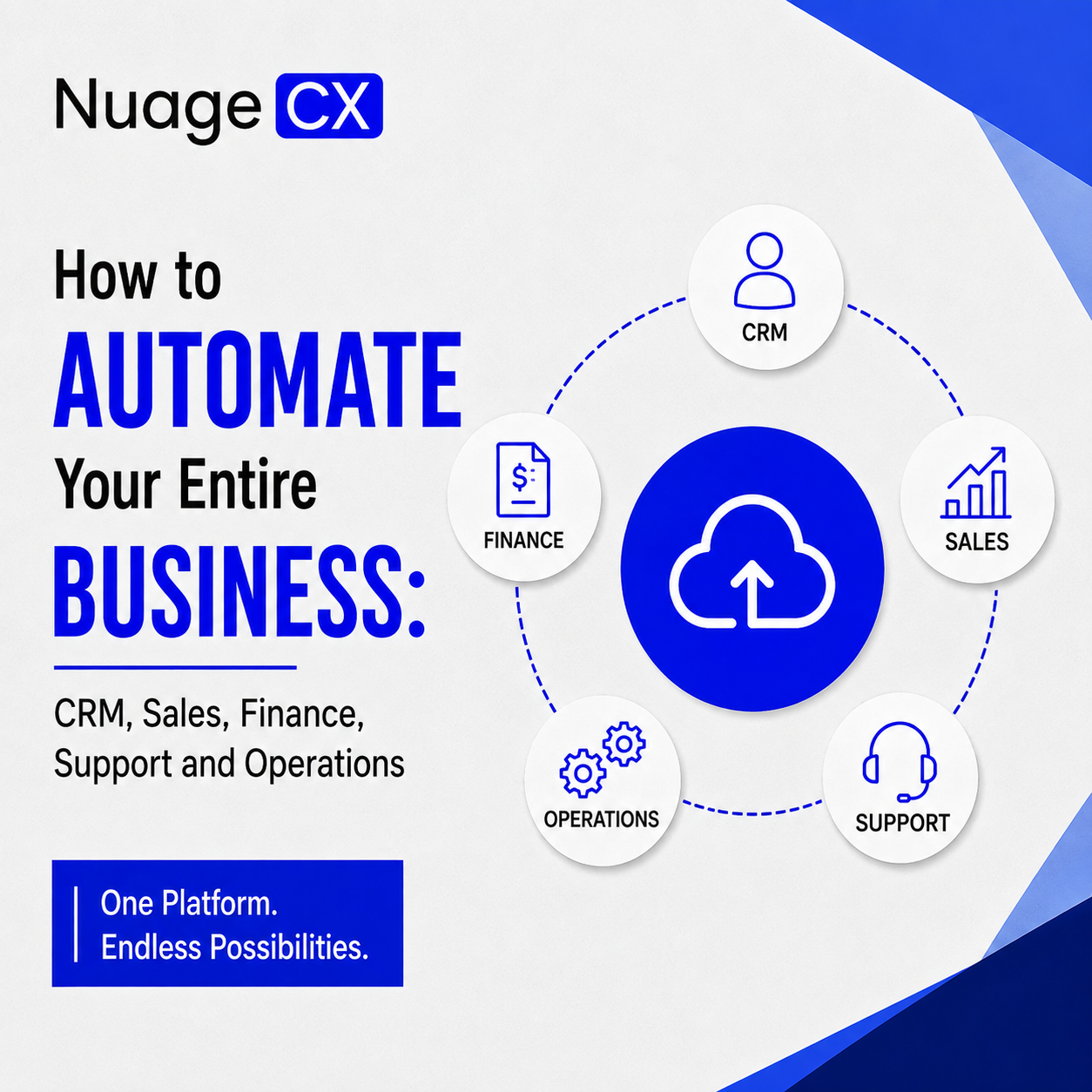
Business automation is not simply sending an automatic email or creating a workflow inside your CRM.
For a growing organization, full business automation can connect the complete business lifecycle.
A typical connected process can look like:
Marketing → Lead Generation → CRM → Sales → Quotation → Order → ERP / Operations → Invoice → Payment → Customer Support → Analytics
At the same time, internal processes can connect HR, employee management, expenses, projects, approvals and payroll.
The result is a business where information does not have to be manually transferred from one department to another every time a process moves forward.
For example, when a sales opportunity becomes a customer, the next steps can trigger automatically.
Customer information can move into the relevant finance process.
The order can move into operations.
The customer can become available to the support team.
Management can get visibility into revenue, pipeline and customer activity.
Marketing can continue engaging with the customer.
Instead of building isolated automations, the business creates a connected operating environment.
That is the difference between automating individual tasks and automating the business.